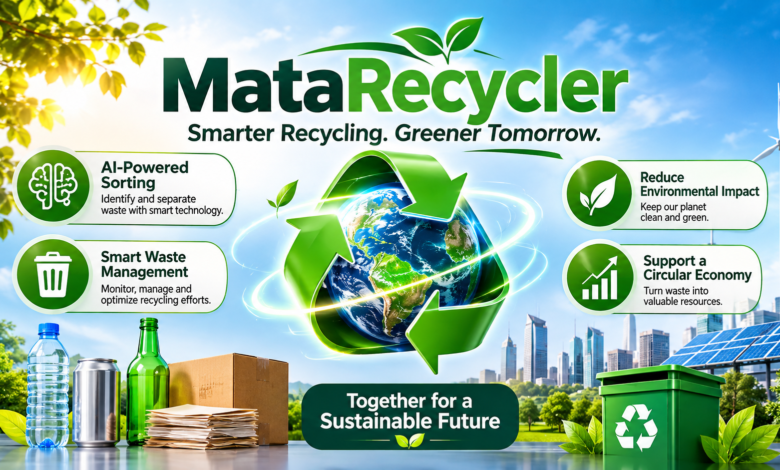
MataRecycler is a name associated with modern recycling, environmental awareness, and technology-based waste management. As concerns about plastic pollution, overflowing landfills, electronic waste, and environmental damage continue to grow, interest in smarter recycling solutions is increasing. MataRecycler has gained attention through online discussions and articles describing its potential role in making waste management more efficient, accessible, and environmentally responsible.
However, understanding MataRecycler requires distinguishing between its documented identity as an informational platform and claims that associate it with advanced recycling technology. Although some descriptions present it as an artificial intelligence (AI)-powered recycling system, publicly available evidence does not yet establish a verified commercial machine, manufacturer, or operational recycling network under this name.
This article explores MataRecycler, its background, its sustainability objectives, the technology associated with it, its reported features, potential benefits, limitations, and future possibilities. It also examines what is currently known and what readers should treat with caution.
Quick Information Table
| Information | Details |
| Main keyword | MataRecycler |
| Main subject | Recycling and sustainability |
| Associated industry | Waste management and environmental technology |
| Documented identity | Online informational platform |
| Main purpose | Recycling education and environmental awareness |
| Related technologies | AI, smart sensors, automation and data analytics |
| Materials discussed | Plastic, paper, glass, metals and electronic waste |
| Environmental focus | Waste reduction, reuse and resource conservation |
| Potential users | Households, communities, businesses and municipalities |
| Commercial product status | Not independently verified |
| Official AI machinery | Not established by reliable public evidence |
| Main objective | Promoting responsible recycling practices |
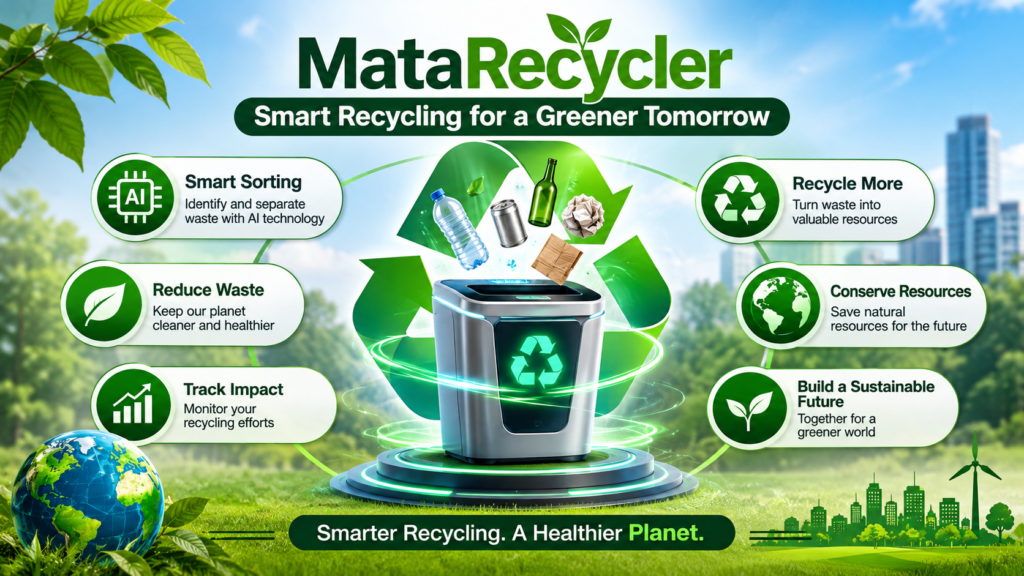
What Is MataRecycler?
MataRecycler is a name used in connection with recycling information, sustainable living, waste reduction, and modern environmental solutions. Its online presence presents recycling as an important part of building cleaner and more responsible communities.
The informational-platform interpretation has a clearer basis than the claims about a specific commercial recycling product. An online platform associated with the MataRecycler name describes its purpose as sharing information about modern recycling, sustainable practices, and technology-related developments.
Some other articles describe MataRecycler as an advanced waste-management concept that combines artificial intelligence, smart sensors, and automated sorting. These descriptions suggest that technology could help identify recyclable materials and improve the management of household and commercial waste.
Nevertheless, there is an important distinction between a proposed technological approach and a verified product. No sufficiently established public documentation identifies a specific MataRecycler machine, manufacturer, technical specification, or confirmed municipal installation.
Therefore, MataRecycler is best understood as a recycling-related online identity and sustainability concept rather than a proven commercial AI recycling system.
Background and History of MataRecycler
MataRecycler has appeared in online content focusing on environmental awareness and the growing need for improved recycling practices.
Traditional waste-management systems face several challenges, including inefficient sorting, contaminated recyclable materials, limited public awareness, and inadequate recycling infrastructure. These problems have encouraged interest in digital platforms and innovative approaches that could make recycling easier.
The MataRecycler name has been used to discuss these challenges and the potential role of technology in addressing them.
Development of Its Online Identity
The informational identity associated with MataRecycler focuses on making recycling and sustainability information easier to understand. Its stated objectives include explaining modern recycling practices, sharing environmental information, and introducing readers to relevant technological developments.
The name has also been used by other online publishers to describe smart recycling systems. These descriptions are not necessarily evidence of a single organization or product.
Growing Interest in Smart Recycling
Interest in smart recycling has increased as communities look for better ways to manage growing quantities of waste.
Modern recycling facilities increasingly explore automation, computer vision, sensors, and data analysis. These technologies can help improve sorting operations and provide better information about waste collection.
MataRecycler-related discussions reflect this broader interest in combining environmental responsibility with technological development.
How Does MataRecycler Work?
The way MataRecycler works depends on which description is being considered. Its informational-platform role involves sharing recycling knowledge, while its proposed smart-recycling role is described through technologies commonly used in modern waste-management systems.
The following stages explain how the smart-recycling approach associated with the name could operate. They should not be interpreted as confirmed specifications of an existing MataRecycler product.
1. Identifying Waste Materials
The first stage of smart recycling involves identifying different types of waste.
An AI-based system can use cameras, image recognition, and sensors to examine discarded materials. It may distinguish between plastic containers, paper, cardboard, glass bottles, aluminium cans, and certain electronic components.
Correct identification is important because different materials require different recycling processes.
2. Separating Recyclable Materials
After identification, automated sorting equipment can direct materials into separate categories.
For example:
- Plastic items can be separated according to material type.
- Paper and cardboard can be collected for paper recycling.
- Glass can be separated from other household waste.
- Metals can be directed towards metal recovery.
- Electronic waste can be handled through specialised recycling processes.
Automated sorting can reduce dependence on manual inspection and improve consistency when properly configured.
3. Monitoring Waste Collection
Smart waste-management systems can use sensors to monitor the amount of waste inside collection containers.
These sensors may provide information about bin capacity and help waste-management teams determine when collection is necessary.
This approach can reduce unnecessary collection journeys and improve the organisation of waste-management operations.
4. Analysing Recycling Information
Digital analytics can help organisations understand how much waste they collect, which materials are most common, and where recycling performance needs improvement.
The information can support better planning and help municipalities develop more effective waste-management strategies.
Although these functions are associated with smart recycling discussions about MataRecycler, their actual implementation under the MataRecycler name has not been independently established.
Main Features Associated with MataRecycler
Several features are frequently discussed in connection with MataRecycler. Some relate to its documented informational purpose, while others describe possible applications of smart recycling technology.
Recycling Education and Information
One of the clearest purposes associated with MataRecycler is providing information about recycling and environmental responsibility.
Educational content can help readers understand:
- How recycling works.
- Why waste separation matters.
- How to reduce household waste.
- Why reusing materials is important.
- How technology can support sustainability.
- How communities can improve recycling habits.
Accessible information is particularly valuable for people who are unfamiliar with recycling procedures.
Artificial Intelligence and Smart Sorting
Some descriptions associate MataRecycler with AI-powered waste identification.
Artificial intelligence can analyse images and recognise patterns to distinguish between different materials. In industrial recycling facilities, similar technology can support automated sorting and reduce the amount of recyclable material that is incorrectly classified.
However, there is no sufficiently verified technical specification confirming that MataRecycler itself currently provides an AI sorting machine.
Smart Sensors and Waste Monitoring
Sensors are another technology associated with the smart-recycling concept.
In established waste-management applications, sensors can monitor container capacity, equipment performance, and collection requirements.
This information may help waste-management organisations improve operational efficiency.
Digital Information and Analytics
Digital analytics can make recycling information more useful for households, businesses, and local authorities.
Potential applications include monitoring recycling participation, identifying common waste categories, and evaluating collection performance.
These capabilities are possible within modern digital waste-management systems, but a dedicated MataRecycler analytics service has not been confirmed.
Mobile Application and Digital Tracking
Some online descriptions suggest that MataRecycler could provide an application for recycling guidance, activity tracking, notifications, and recycling reminders.
Such features would make recycling information more convenient for everyday users.
However, a verified official mobile application with these functions has not been established. Readers should not assume that an application is available simply because third-party descriptions mention one.
Why Is MataRecycler Relevant to Modern Recycling?
Waste management is one of the major environmental challenges facing modern communities. Population growth, increasing consumption, disposable packaging, and electronic products contribute to growing quantities of discarded materials.
Traditional recycling systems often struggle with contamination, inadequate collection facilities, and inconsistent public participation.
MataRecycler-related discussions highlight several important areas where improved recycling practices could make a difference.
Reducing Environmental Pollution
Improper waste disposal can contribute to air, soil, and water pollution.
Plastic materials are particularly problematic because they can remain in the environment for long periods and break down into smaller particles.
Improving recycling habits and encouraging responsible disposal can help reduce the quantity of waste entering natural environments.
Conserving Natural Resources
Recycling allows valuable materials to be recovered and used again instead of relying entirely on newly extracted resources.
For example, recovering aluminium can significantly reduce the energy required compared with producing aluminium from raw materials.
Paper recycling can also reduce demand for virgin wood pulp and support more efficient resource use.
Improving Waste Separation
Incorrectly mixed waste can reduce the quality of recyclable materials.
Separating paper, plastic, glass, and metals before collection makes further processing easier.
Clear educational information and effective sorting systems can help households develop better waste-management habits.
Supporting Sustainable Communities
Community participation is essential for successful recycling programmes.
Schools, businesses, residential organisations, and local authorities can encourage responsible waste disposal through education and practical recycling initiatives.
An informational platform such as MataRecycler can contribute to environmental awareness by making sustainability topics easier to understand.
Potential Benefits of MataRecycler
The benefits associated with MataRecycler depend on whether the discussion concerns its informational purpose or the proposed smart-recycling concept.
1. Better Environmental Awareness
Educational resources can help people understand the consequences of improper waste disposal.
When individuals understand how recycling works, they may become more willing to separate waste and reuse suitable materials.
2. Improved Recycling Habits
Regular access to clear recycling guidance can help people develop consistent habits.
Knowing which materials can be recycled, how to prepare them, and where to dispose of them correctly can reduce confusion.
3. Greater Resource Efficiency
Smart recycling technology can help recover materials that might otherwise be discarded.
Better sorting and collection processes can improve the efficiency of recycling facilities and support the circular economy.
4. Reduced Waste-Management Costs
Automated sorting, accurate collection planning, and better monitoring can potentially reduce operational expenses.
For municipalities and businesses, more efficient collection and processing may help limit unnecessary transportation and disposal costs.
However, the financial benefits depend on equipment prices, maintenance, labour requirements, infrastructure, and local recycling markets.
5. Support for Sustainable Business Practices
Businesses generate different types of waste through manufacturing, packaging, transportation, and daily operations.
Recycling education and effective waste-management planning can help organisations reduce unnecessary disposal and demonstrate environmental responsibility.
6. Increased Public Participation
Simple information and accessible educational material can encourage more people to participate in local recycling programmes.
Public involvement is particularly important because even advanced recycling equipment cannot solve waste-management problems without proper collection and separation practices.
MataRecycler and the Role of Artificial Intelligence in Recycling
Artificial intelligence is becoming increasingly relevant to environmental technology.
Modern AI systems can process images, recognise material characteristics, and support automated decision-making. These capabilities have applications in recycling facilities where large quantities of mixed waste need to be separated.
Computer Vision
Computer vision allows software to analyse images captured by cameras.
In a recycling facility, this technology can help identify different objects and distinguish between materials.
Machine Learning
Machine learning systems improve their ability to recognise patterns through training data.
In recycling applications, these systems can be trained to recognise different packaging types and material categories.
Automated Sorting Equipment
Robotic arms, conveyor belts, and mechanical separators can work together to move identified materials into different collection streams.
The combination of machine vision and mechanical sorting can improve processing efficiency.
Data-Based Waste Management
AI-supported analytics can help organisations understand waste patterns and improve their operations.
For example, information about collection volumes may help determine where additional recycling facilities are needed.
These are genuine applications of modern recycling technology. However, they should be distinguished from unverified claims that MataRecycler has already developed or deployed these capabilities.
Challenges and Limitations of MataRecycler
Although smart recycling offers promising opportunities, several challenges must be considered before treating any proposed system as a complete waste-management solution.
Lack of Verified Product Information
One important limitation is the lack of independently confirmed information about a commercial MataRecycler product.
Public descriptions do not establish a verified manufacturer, product catalogue, technical specifications, pricing structure, or confirmed operational installations.
This makes it difficult to evaluate its actual performance or commercial availability.
Conflicting Online Descriptions
Different articles describe MataRecycler in different ways.
Some present it as an educational website, while others describe an AI-powered recycling system or an application-based service.
These descriptions should not automatically be treated as evidence of one unified product or organisation.
Technology and Infrastructure Costs
Advanced recycling systems can require cameras, sensors, automated equipment, software, maintenance, and trained operators.
For communities with limited budgets, installing and maintaining such infrastructure may be difficult.
Material Contamination
Food residue, liquids, chemicals, and incorrectly sorted materials can contaminate recyclable waste.
Even advanced identification technology cannot eliminate every contamination problem.
Proper preparation and separation remain essential.
Differences in Local Recycling Rules
Recycling regulations and accepted materials differ between locations.
A material accepted by one recycling facility may not be accepted by another. Therefore, users should always follow instructions from their local waste-management authority.
Who Can Benefit from the MataRecycler Approach?
The educational and technological ideas associated with MataRecycler are relevant to several groups.
Households
Families can benefit from accessible recycling information, better waste separation, and practical guidance about reducing everyday waste.
Schools and Educational Institutions
Teachers can use sustainability information to introduce students to environmental protection, responsible consumption, and recycling practices.
Businesses
Companies can use recycling education and improved waste-management planning to reduce unnecessary disposal and support sustainability objectives.
Municipalities
Local authorities can explore digital monitoring, automated sorting, and improved collection planning as part of wider waste-management strategies.
Environmental Organisations
Environmental groups can use educational resources to promote recycling awareness and encourage community participation.
These are potential audiences for recycling education and smart waste-management solutions, not confirmed MataRecycler customers.
Latest Updates and Current Status of MataRecycler in 2026
As of November 2026, the most important development in understanding MataRecycler is the growing distinction between its informational identity and the more ambitious technological claims associated with its name.
An article published on 10 April 2026 presented MataRecycler as a smart recycling initiative involving AI, sensors, and automated material identification. It also discussed potential applications in community waste management.
However, subsequent discussions published in October and November 2026 have highlighted the lack of independently verified evidence for a specific commercial MataRecycler machine or established AI-powered recycling network.
The available information supports the following assessment:
- Informational presence: MataRecycler is associated with online recycling and sustainability content.
- AI recycling claims: These appear in third-party descriptions but lack sufficient independent product verification.
- Smart-bin technology: The technology exists in the wider waste-management industry, but a specific MataRecycler installation is not established.
- Mobile application: Claims about an official app remain unverified.
- Commercial availability: No sufficiently verified product pricing or purchasing information has been established.
- Ownership: The identity of a confirmed commercial manufacturer or business operator remains unclear.
This distinction is important for anyone researching the topic. An online article describing a technology does not necessarily mean that the named organisation has developed, manufactured, or deployed it.
The most responsible way to approach MataRecycler is to consider its educational contribution separately from claims about physical recycling equipment.
The Future of MataRecycler and Smart Recycling
The future of recycling will likely involve greater use of automation, digital information, artificial intelligence, and improved material recovery processes.
MataRecycler’s sustainability-related identity fits into this wider conversation about making recycling more accessible and efficient.
Several developments could be relevant to its future direction.
More Accessible Recycling Education
Simple educational resources can help people understand waste separation and sustainable consumption.
Expanding practical guidance for households, schools, and businesses could strengthen public environmental awareness.
Integration with Smart City Initiatives
Smart cities increasingly explore connected infrastructure to improve public services.
Waste monitoring, collection optimisation, and digital reporting could become important parts of future municipal recycling programmes.
Better Electronic Waste Management
Electronic waste contains materials that may be recovered and reused, but it also requires careful handling.
Improved public information and specialised collection programmes can help prevent hazardous electronic components from entering ordinary waste streams.
Greater Focus on the Circular Economy
The circular economy encourages products and materials to remain useful for as long as possible.
Instead of following a simple take-make-dispose model, businesses and communities can prioritise repair, reuse, refurbishment, and recycling.
MataRecycler-related educational discussions can support awareness of these principles.
Stronger Transparency and Verification
For MataRecycler to establish credibility as a commercial technology provider, clear documentation would be important.
This could include identifiable ownership, product specifications, independent performance testing, verified installations, and transparent information about services.
Such evidence would help readers and potential users distinguish actual capabilities from general descriptions of smart recycling technology.
Frequently Asked Questions About MataRecycler
1. What is MataRecycler?
MataRecycler is a name associated with recycling information, sustainability education, and discussions about modern waste-management technology. It is also described by some online publishers as a smart recycling concept, although a commercial AI-powered product under this name has not been independently verified.
2. Is MataRecycler a real company?
A verified commercial company operating under this name has not been established through the available information. The name is associated with online informational content, but readers should not assume that this proves the existence of a registered recycling technology manufacturer.
3. Does MataRecycler use artificial intelligence?
Some articles describe MataRecycler as an AI-powered recycling system. However, no sufficiently reliable technical documentation confirms that a specific commercial MataRecycler product currently uses AI.
4. Does MataRecycler have a mobile application?
Some descriptions mention an application for recycling guidance, reminders, and activity tracking. However, a verified official application with these features has not been established.
5. What materials are associated with MataRecycler?
Descriptions of the proposed smart-recycling concept commonly mention plastic, paper, cardboard, glass, metals, and electronic waste. These are general recycling categories rather than a verified official MataRecycler compatibility list.
6. How can MataRecycler support environmental protection?
Its informational purpose can support environmental awareness by explaining recycling, reuse, waste reduction, and sustainable practices. The broader smart-recycling concept could also support more efficient material recovery if implemented through verified technology.
7. Is MataRecycler free to use?
Publicly accessible informational content is associated with the MataRecycler name. However, there is no sufficiently verified pricing information for a commercial recycling machine, subscription service, or dedicated software product.
8. Is MataRecycler suitable for businesses?
Recycling education and smart waste-management practices can be useful for businesses. However, organisations considering a specific MataRecycler commercial service should first verify its provider, capabilities, pricing, and technical documentation.
9. Is MataRecycler the same as a smart recycling machine?
Not necessarily. The name is used for informational content as well as descriptions of a proposed smart-recycling system. There is insufficient evidence to establish that these references represent one verified physical product.
10. Why is MataRecycler receiving attention?
The growing interest in recycling technology, environmental protection, AI-powered waste sorting, and sustainable living has contributed to online discussions about MataRecycler. Its name connects with broader efforts to make waste management more efficient and environmentally responsible.
Final Thoughts
MataRecycler is a recycling-related name connected with sustainability education, responsible waste management, and discussions about modern environmental technology. Its informational purpose offers a way to explore recycling practices, waste reduction, and the importance of protecting natural resources.
The technology associated with its name also reflects genuine developments in the recycling industry, including artificial intelligence, computer vision, smart sensors, and automated material sorting. These innovations have the potential to improve waste recovery and support more sustainable communities.
However, it is essential to separate general technological possibilities from verified MataRecycler capabilities. Its identity as a specific commercial AI recycling product, manufacturer, or operational waste-management network has not been sufficiently established.
Ultimately, the most valuable lesson associated with MataRecycler is the importance of responsible recycling. Better waste separation, greater public awareness, material reuse, and reliable recycling infrastructure can all contribute to a cleaner and more sustainable future.
Getdailymag.com