Introduction
Viltnemnda is a Norwegian term commonly associated with a municipal wildlife management committee. The word combines vilt, meaning wildlife or game animals, and nemnda, meaning committee or board. In Norway, the term is used in connection with local wildlife administration, hunting management, animal populations, and the relationship between wildlife and local communities.
An important distinction is that Viltnemnda is not necessarily one nationwide government organization. Municipalities can organize wildlife responsibilities differently, and the powers of a particular committee depend on local regulations and delegated authority.
The keyword also has an online identity: Viltnemnda.net describes itself as an independent information website rather than an official municipal wildlife authority. Understanding this distinction is essential when researching the name, its purpose, and the information associated with it.
Quick Information Table About Viltnemnda
| Information | Details |
| Main keyword | Viltnemnda |
| Language | Norwegian |
| Word meaning | Wildlife committee |
| Country associated with the term | Norway |
| Main subject | Local wildlife management |
| Organizational context | Municipal government |
| Common responsibilities | Wildlife administration, hunting management, population monitoring |
| Related activities | Fallen wildlife, injured animal response, hunting areas |
| Key stakeholders | Municipalities, hunters, landowners, residents |
| Relevant legislation | Norwegian wildlife and nature-management legislation |
| Organizational structure | Varies by municipality |
| Website identity | Independent informational publishing website |
| Official government status | The website should not be confused with a municipal authority |
What Is Viltnemnda?
The term Viltnemnda has two closely related uses: it describes a type of Norwegian municipal wildlife committee, and it is also the name used by an online publishing website.
In the Norwegian language, the word is formed from two parts:
- Vilt: Wildlife, wild animals, or game.
- Nemnd: Committee, board, or appointed group.
Together, Viltnemnda refers to a wildlife committee responsible for dealing with local wildlife-related matters.
Viltnemnda as a Municipal Committee
In the Norwegian local-government system, a municipality may establish a wildlife committee to handle wildlife management matters.
These committees can contribute to decisions involving hunting, wildlife populations, habitat protection, and cooperation between local authorities and people who depend on natural resources.
However, not every municipality uses an identical organizational structure. Some have a dedicated Viltnemnda, while others assign wildlife responsibilities to another political committee or municipal administrative department.
Viltnemnda as an Online Website
Viltnemnda.net is an independent online publishing website.
Its homepage features wildlife-related educational articles, including animal information, nature guides, and environmental topics. It also publishes content in other categories, such as technology, education, travel, health, business, and lifestyle.
The website explicitly states that it is not affiliated with a Norwegian municipal wildlife committee or government authority.
This distinction is important for readers looking for official hunting permits, municipal decisions, wildlife assistance, or government information.
Background and History of Viltnemnda
Origins of Municipal Wildlife Committees
Norway has a long tradition of hunting, fishing, land management, and wildlife conservation.
Historically, wildlife management was closely connected to agriculture, forestry, landownership, and local hunting traditions. As populations and land use changed, organized wildlife management became increasingly important.
Municipal authorities developed responsibilities for managing local wildlife resources and coordinating the interests of hunters, landowners, farmers, and conservation groups.
Local wildlife committees became one way of organizing this work.
Their purpose was to bring local knowledge into public decision-making while maintaining consistency with national environmental and hunting regulations.
Development of Wildlife Management
Over time, Norwegian wildlife management became more structured through legislation, regulations, scientific research, and municipal administration.
Modern wildlife management considers several factors:
- Animal population estimates.
- Wildlife habitat conditions.
- Hunting pressure.
- Agricultural and forestry interests.
- Road accidents involving wild animals.
- Biodiversity protection.
- Sustainable use of natural resources.
Today, local wildlife management operates within a broader national framework involving municipalities, government agencies, environmental authorities, and landowners.
Development of Viltnemnda.net
The online identity of Viltnemnda.net is different from the historical development of municipal wildlife committees.
The website describes itself as an independent online information resource. Its published material covers wildlife education and a wider range of informational subjects.
Its content includes practical guides, animal-related educational articles, and general-interest publications.
It should therefore be understood as a publishing platform rather than an official government wildlife-management service.
Main Responsibilities of a Municipal Viltnemnda
The exact responsibilities of a Viltnemnda depend on its municipality’s rules and delegated powers.
Nevertheless, several important areas commonly appear in local wildlife-management work.
1. Wildlife Population Management
One important responsibility of local wildlife administration is maintaining a sustainable balance between wildlife populations and their natural environments.
This includes considering the numbers of animals in a particular area, the availability of suitable habitats, and the effects of human activity.
For example, municipalities have specific responsibilities concerning moose, red deer, and roe deer.
Population management helps prevent excessive pressure on vegetation, agricultural land, and other natural resources.
2. Hunting Management
Hunting is an important part of Norway’s wildlife-management system.
Municipalities have responsibilities relating to hunting areas, population plans, and allocation of hunting permits for certain deer species.
A local wildlife committee may participate in these matters when authority has been delegated to it.
The objective is to support responsible hunting while ensuring that wildlife populations remain sustainable.
It is important to understand that local committees do not independently establish all national hunting seasons or hunting regulations.
These matters are governed by national legislation and regulations.
3. Protection of Wildlife Habitats
Wild animals depend on suitable habitats for feeding, breeding, shelter, and movement.
Municipal wildlife management can contribute to protecting these environments by bringing wildlife considerations into local planning.
Important habitat-related issues include:
- Forest management.
- Agricultural development.
- Road construction.
- Wildlife migration routes.
- Wetland protection.
- Biodiversity conservation.
Protecting habitats helps maintain healthy wildlife populations over the long term.
4. Management of Injured and Fallen Wildlife
Another important area is the management of injured or dead wildlife.
In Norway, the term fallvilt refers to wildlife found dead or killed outside ordinary hunting activities.
Examples include animals involved in road accidents or animals found injured in the countryside.
Municipalities may organize search teams and other arrangements to deal with these incidents.
For traffic-related wildlife collisions, the police play an important role in coordinating the response.
5. Cooperation with Local Communities
Wildlife management involves many different groups.
Hunters, farmers, landowners, residents, environmental organizations, and municipal authorities may have different priorities.
A Viltnemnda can provide a forum for discussing these interests and finding practical solutions.
Cooperation is particularly important when wildlife causes agricultural damage, creates road-safety problems, or affects local businesses.
How Viltnemnda Works
The working process depends on local regulations, but municipal wildlife committees generally operate through organized administrative and political procedures.
Collection of Information
Wildlife management decisions should be based on reliable information.
Relevant information may include:
- Wildlife population estimates.
- Hunting statistics.
- Animal movement patterns.
- Reports of road accidents.
- Agricultural damage reports.
- Habitat assessments.
- Observations from hunters and landowners.
This information helps decision-makers understand local conditions.
Review and Discussion
The committee may review reports and discuss wildlife-related applications or management proposals.
Depending on the issue, it may consult municipal employees, wildlife specialists, landowners, hunters, and other relevant authorities.
Decision-Making
Some committees have delegated authority to make decisions within defined areas.
Other matters require recommendations or formal consideration by the municipal council.
Decisions must follow the relevant legislation, local delegation rules, and administrative procedures.
Documentation and Reporting
Official committee meetings generally involve agendas, case documents, and meeting minutes.
For example, the municipality of Søndre Land has published regulations describing its Viltnemnda’s membership, responsibilities, meeting procedures, and reporting requirements.
Its regulations also require an annual report about the committee’s activities.
Organization and Membership
A municipal Viltnemnda is generally organized through local political and administrative arrangements.
Appointment of Members
In municipalities with a dedicated committee, members are normally appointed through the municipal political system.
A published regulation from Søndre Land provides an example of this structure.
It specifies:
- Five committee members.
- Three substitute members.
- Appointment by the municipal council.
- A four-year term corresponding to the municipal election period.
- Selection of a chairperson and deputy chairperson by the municipal council.
Other municipalities may have different arrangements.
Knowledge and Experience
Members may bring different types of experience to wildlife-management discussions.
Relevant backgrounds can include:
- Hunting and wildlife management.
- Agriculture.
- Forestry.
- Environmental conservation.
- Landownership.
- Local administration.
- Outdoor recreation.
The combination of political representation and local knowledge can help committees understand practical wildlife-management challenges.
Administrative Support
Municipal staff may provide administrative and professional support.
This can include preparing meeting documents, gathering wildlife information, coordinating applications, maintaining records, and assisting with official procedures.
Important Norwegian Wildlife Laws and Regulations
Viltnemnda operates within a legal framework designed to protect wildlife and regulate hunting activities.
Understanding the legislation is essential because local committees cannot exercise powers beyond their legal authority.
The Nature Diversity Act
The Norwegian Nature Diversity Act, known as Naturmangfoldloven, provides an important framework for biodiversity protection and sustainable management of natural resources.
It addresses matters such as:
- Conservation of biological diversity.
- Protection of ecosystems.
- Sustainable use of nature.
- Environmental decision-making.
- Protection of threatened species.
Wildlife-management decisions must take environmental considerations into account.
The Wildlife Act and Its Replacement
Historically, the Wildlife Act of 1981, known as Viltloven, was an important legal foundation for hunting and wildlife management in Norway.
However, an important legal development took place in 2026.
The new Act relating to hunting, trapping, and culling of wildlife, known as Viltressursloven, entered into force on 1 July 2026.
It replaced the previous Wildlife Act.
The new legislation largely continues existing legal principles while reorganizing the regulatory framework and addressing modern challenges in wildlife management.
Wildlife Management Regulations
Other relevant regulations address practical matters such as:
- Management of deer populations.
- Hunting permits.
- Hunting methods.
- Minimum hunting-area requirements.
- Municipal wildlife funds.
- Reporting and documentation.
- Animal welfare.
These rules help ensure that wildlife management is conducted responsibly and consistently.
Wildlife Management of Moose, Red Deer, and Roe Deer
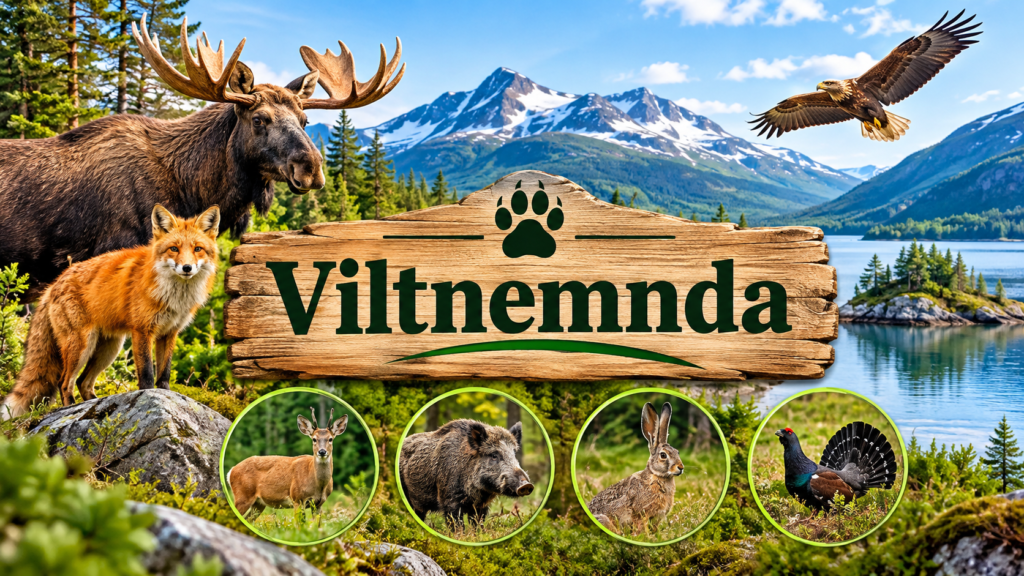
Moose, red deer, and roe deer are particularly important species in Norwegian municipal wildlife management.
Municipalities have defined responsibilities for managing these populations.
Moose Management
Moose are among Norway’s most recognizable large wild mammals.
Their populations need to be managed with consideration for habitat conditions, forestry, traffic safety, and hunting interests.
Municipal authorities establish population-management objectives and administer relevant hunting arrangements.
Red Deer Management
Red deer are important to Norwegian ecosystems and hunting activities.
Their management involves population planning, hunting-area approval, and allocation of hunting permits within the applicable regulations.
Roe Deer Management
Roe deer are smaller members of the deer family and occur in many Norwegian landscapes.
Their management may involve population monitoring, hunting arrangements, and consideration of agricultural and environmental impacts.
Why Population Management Matters
Effective wildlife management helps balance several objectives:
- Maintaining healthy animal populations.
- Protecting natural habitats.
- Reducing road accidents.
- Supporting sustainable hunting.
- Preventing unnecessary agricultural damage.
- Maintaining biodiversity.
These objectives require accurate information and cooperation between different stakeholders.
Wildlife Funds and Financial Management
Municipal wildlife funds are another important part of Norwegian wildlife administration.
These funds support activities related to local wildlife management.
Their income and permitted expenses are governed by regulations.
Depending on the applicable rules, funding can support activities such as:
- Wildlife population surveys.
- Management planning.
- Wildlife research.
- Habitat-related initiatives.
- Collection of hunting statistics.
- Other approved wildlife-management projects.
The administration of these funds is generally a municipal responsibility.
A Viltnemnda may receive authority to use or recommend the use of funds, depending on its local mandate.
The Importance of Viltnemnda for Local Communities
Wildlife management affects more than animals and hunting activities.
It also influences road safety, agriculture, tourism, environmental protection, and local economic interests.
Supporting Farmers and Landowners
Wild animals can sometimes damage crops, forests, and other property.
Local wildlife administration can help assess these problems and identify suitable management measures.
Improving Road Safety
Collisions between vehicles and wild animals are a serious concern in many rural areas.
Coordinated reporting, animal searches, and appropriate follow-up can reduce unnecessary animal suffering and improve public safety.
Supporting Responsible Hunting
Clear rules and effective population management help maintain responsible hunting practices.
They also support cooperation between hunters, landowners, and public authorities.
Protecting Biodiversity
Sustainable wildlife management helps maintain healthy ecosystems.
It considers not only individual animals but also their habitats, food sources, migration patterns, and relationships with other species.
Latest Updates About Viltnemnda in 2026
Several developments are particularly relevant to the subject in 2026.
Introduction of the Viltressursloven
The most significant legal update is the introduction of the Viltressursloven on 1 July 2026.
The legislation was adopted by the Norwegian Parliament on 2 June 2025.
It replaces the Wildlife Act of 1981 and updates the legal framework for hunting, trapping, and wildlife culling.
The new legislation largely continues existing legal principles while introducing changes intended to address modern wildlife-management requirements.
Changes to Hunting Regulations
The new legislation also involves changes to related regulations.
One notable example concerns certain special sighting equipment, including thermal and light-amplifying equipment, for deer hunting when the municipality has permitted its use through a local regulation.
Other changes address hunting dogs and the responsible practice of hunting.
Continued Importance of Municipal Wildlife Management
Despite the updated national legislation, municipalities remain important participants in local wildlife management.
Their responsibilities include local population objectives, approved hunting arrangements, and administration of relevant wildlife-related activities.
The exact duties of an individual Viltnemnda still depend on its municipal mandate and the current legal framework.
New Educational Content on Viltnemnda.net
The online website also continues to publish educational wildlife content.
Its recent material includes topics such as animal identification, wildlife habitats, animal behaviour, and general nature education.
The website’s content should be treated as independent informational material rather than official government guidance.
Viltnemnda.net: Main Features and Content
For readers interested in the website itself, several content areas are worth understanding.
Wildlife Articles
The website publishes educational articles about different animal species and wildlife-related subjects.
Topics include animal habitats, physical characteristics, behaviour, and environmental adaptations.
These articles can help general readers develop a better understanding of the natural world.
Educational Guides
Educational guides explain wildlife and environmental topics in accessible language.
They are intended to make information easier to understand for readers who may not have specialist knowledge.
General Informational Content
The website also covers subjects outside wildlife.
Its broader publishing categories include education, business, technology, health, travel, finance, and lifestyle.
This makes it a general informational publishing platform rather than a specialist municipal wildlife database.
Independent Publishing Identity
The website’s About Us information describes it as an independently operated online resource.
Its stated editorial focus includes educational content, digital learning, and general informational articles.
It also provides contact information for questions, suggestions, and feedback.
How to Find Official Viltnemnda Information
Readers looking for actual wildlife-management services should identify the municipality responsible for their location.
The name Viltnemnda alone is not enough to identify the correct authority.
For Hunting Permits
Contact the municipality responsible for the hunting area.
Ask about hunting permissions, approved hunting areas, relevant population plans, and current requirements.
For Injured Wildlife
For an animal injured in a traffic collision, contact the police so that the appropriate local response can be coordinated.
For other wildlife incidents, the responsible municipality can provide information about the relevant service.
For Official Decisions
Check municipal meeting documents, delegated-authority regulations, and published decisions.
These records provide more reliable information about what a particular committee can legally decide.
For General Wildlife Information
Independent educational websites can help readers understand wildlife species, environmental issues, and general wildlife-management concepts.
However, legal decisions and current permit requirements should always be checked against official information.
Challenges Facing Modern Wildlife Management
Norwegian wildlife management must respond to several ongoing challenges.
Climate Change
Climate change can affect wildlife habitats, food availability, migration patterns, and breeding conditions.
Changing temperatures and precipitation patterns may influence how species survive in different regions.
Human-Wildlife Conflicts
As communities, roads, and agricultural areas expand, interactions between people and wildlife can become more frequent.
Wildlife management needs to address these conflicts without compromising biodiversity.
Habitat Fragmentation
Roads, buildings, forestry, and other development can divide natural habitats.
Fragmentation may prevent animals from moving freely between feeding and breeding areas.
Sustainable Hunting
Hunting needs to remain consistent with population conditions and legal requirements.
Accurate wildlife monitoring and responsible management are essential for maintaining sustainable hunting opportunities.
Public Awareness
Wildlife conservation also depends on public understanding.
Educational resources, community participation, and transparent decision-making can help people appreciate the importance of protecting natural environments.
Frequently Asked Questions About Viltnemnda
What does Viltnemnda mean in English?
Viltnemnda is a Norwegian term that translates approximately to wildlife committee or wildlife management committee.
Is Viltnemnda an official government organization?
The term refers to municipal wildlife committees, but there is no single nationwide organization operating under that name. Viltnemnda.net itself is an independent publishing website, not a government authority.
What does a municipal Viltnemnda do?
Depending on local authority, it may participate in wildlife management, hunting administration, population planning, wildlife-related applications, and discussions about animal habitats.
Does every Norwegian municipality have a Viltnemnda?
No. Municipalities can organize their wildlife-management responsibilities differently. Some establish a dedicated committee, while others assign the work to different political or administrative bodies.
Who appoints Viltnemnda members?
Where a dedicated political committee exists, its members are generally appointed through the municipal council according to local organizational regulations.
What is the difference between Viltnemnda and Viltnemnda.net?
Viltnemnda is the Norwegian term for a municipal wildlife committee. Viltnemnda.net is an independent online publishing website that uses the same name.
Which law replaced the Norwegian Wildlife Act?
The Viltressursloven replaced the Wildlife Act of 1981 on 1 July 2026.
Does Viltnemnda issue hunting permits?
A municipal wildlife committee may participate in hunting-permit administration when the municipality has delegated the relevant authority. The municipality remains responsible for its statutory duties.
How can someone contact their local wildlife committee?
The best approach is to visit the official website of the municipality where the wildlife-related issue occurred and search for wildlife management, Viltnemnda, or fallvilt services.
Conclusion
Viltnemnda is an important term in Norwegian wildlife management and local administration. It describes municipal committees that can contribute to wildlife population management, hunting administration, habitat protection, and cooperation between local communities and environmental authorities.
However, the organization and responsibilities of these committees vary between municipalities. Their authority comes from applicable legislation and local delegation rules, rather than from the name alone.
The term also has an online identity through Viltnemnda.net, an independent publishing website that provides wildlife education and general informational content. It should not be confused with an official Norwegian government service.
The introduction of the Viltressursloven in July 2026 is an important development in Norway’s wildlife-management framework. Together with municipal administration, scientific information, and public participation, the updated legislation supports the continued development of responsible wildlife management.
Understanding these distinctions helps readers use the keyword Viltnemnda accurately and find the right information, whether they are researching Norwegian wildlife, learning about hunting administration, or exploring the online publishing website.
Getdailymag.com